
What to do when small frustrations keep turning into anger.
On this page
A place to begin
Interrupt the reaction before trying to solve the inconvenience. Put down what you are holding, pause the conversation if necessary, and return when you can speak without attacking. Then look at what keeps filling your patience before the small frustration arrives. Christian growth includes responsibility for both your response and any repair that follows.
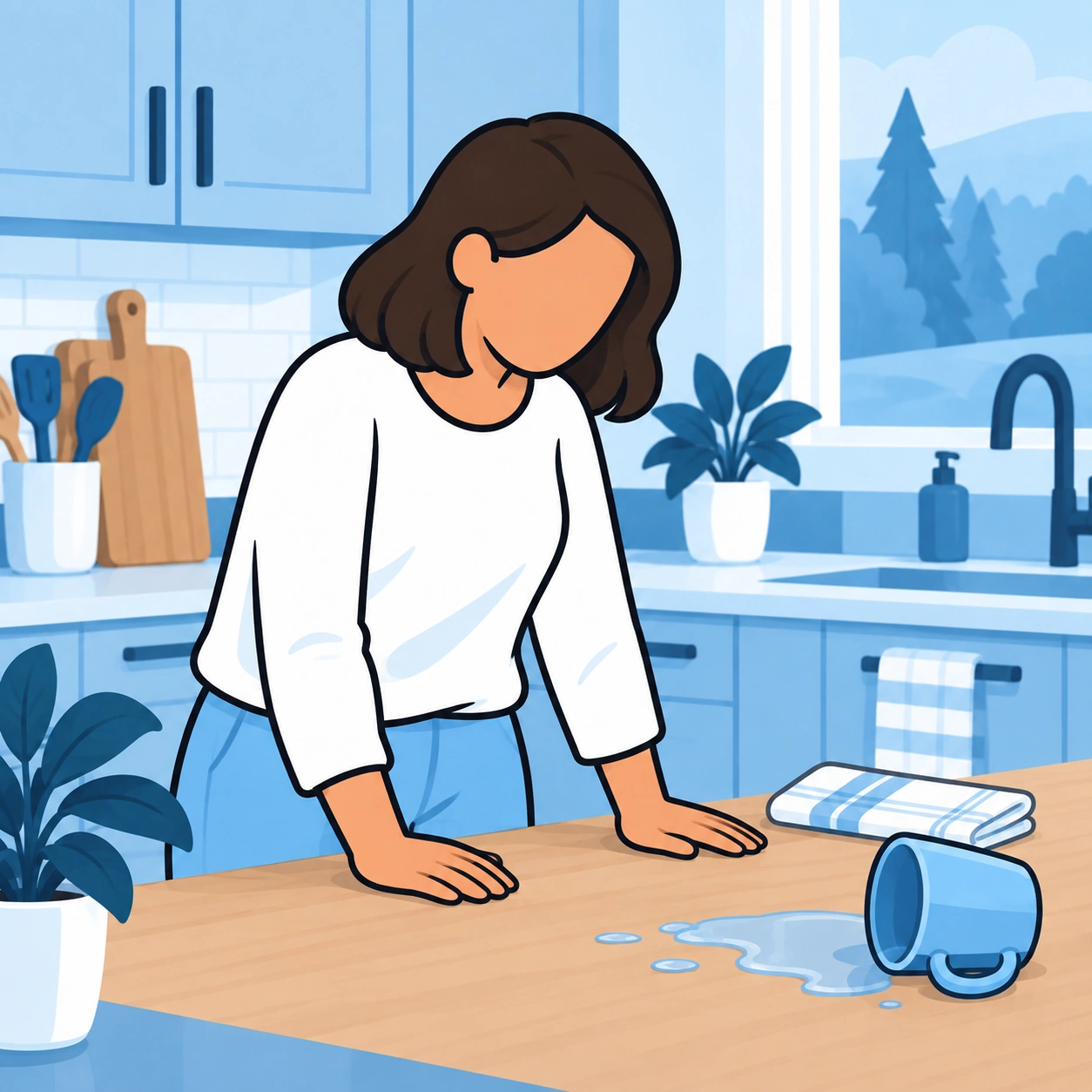
Take enough space to respond safely rather than making someone else absorb the overflow.
A spilled drink or a dropped towel is small. Your reaction is not. Afterward, you may wonder why an ordinary inconvenience drew out so much sharpness, especially toward someone you love.
Understanding what contributed to anger can help you change the pattern. It does not make the person who spilled the drink responsible for the way you spoke.
Notice what happens before the outburst.
Look back at the hour before the incident. Were you rushing, hungry, already resentful, or trying to do several things without help? Identify the recurring situation with enough detail to change something. “I get angry in the evenings” is a start; “I rush dinner while answering work messages” gives you somewhere to act.
Anger can also point toward a real unresolved concern. Perhaps tasks are unevenly shared or an agreement keeps being ignored. Bring that concern into a separate conversation. Trying to settle it through a sarcastic remark about a towel leaves the actual issue unclear.
Repair without asking the other person to comfort you.
A useful apology names your behavior: “I raised my voice over the spill. That was unfair.” Do not follow it with “but you always do this.” If the other person was startled, let them describe their experience without debating whether you meant to frighten them.
Choose a change the other person can observe. Put your phone away during the difficult transition, ask for help earlier, or use a calm phrase to pause a conversation. If reactions involve threats or physical intimidation, prioritize safety and seek qualified help; a promise to try harder is not enough.
Scripture in context
Open a passage to read the Bible text and its surrounding chapter here on AskJesus. The notes below explain how it connects with this question; they are reflections, not Bible quotations.
James 1:19-20
James links quick listening and slow speech with restraint in anger. The passage challenges the idea that a heated reaction reliably accomplishes what is right.
Proverbs 15:1
The proverb describes how a gentle answer can de-escalate conflict. It concerns the manner of your response, not a guarantee that another person will respond well.
Ephesians 4:26-32
Paul distinguishes the experience of anger from allowing it to govern behavior, and calls for speech that builds up, kindness, and forgiveness.
What to do with this today

A clear apology can own the reaction without blaming the person who witnessed it.
Pause the reaction.
Set objects down and stop speaking for a moment. If needed, say when you will return to the conversation.
Name the real load.
Write down what was already straining you before the inconvenience. Choose one practical adjustment.
Apologize clearly.
Name the words or tone you regret, acknowledge their effect, and leave explanations for a separate conversation.
Practice earlier intervention.
Ask for help or take a reasonable pause before you reach the point where a minor problem feels unbearable.
Pause & pray
A prayer for this moment
Father, help me notice anger before I turn it against someone else. Give me humility to own my words and courage to address the concerns beneath them. Teach me patient speech and practical changes that make my apologies trustworthy. In Jesus’ name we pray, Amen.
A question to sit with
What usually happens before you snap, and what could you change at that earlier point?
Common questions
Is feeling angry itself a spiritual failure?
Anger is a feeling you can acknowledge honestly. What you do with it matters. You can examine the concern beneath it while refusing to use it as permission to wound someone.
Should I explain why I was stressed when I apologize?
You can discuss the context, but first take responsibility without making it an excuse. The person hurt by your reaction should not have to defend their experience.

Patient cooperation in a small task is one way to rebuild the pattern you want.