
How to return to church after a long absence.
On this page
A place to begin
Begin by naming why you want to return and what makes it difficult. You can contact a trusted person, choose a service to visit, and attend without making immediate commitments. If your absence involved harm, returning to Christian community does not require returning to the same unsafe setting. Let the next step be informed, supported, and small enough to take honestly.

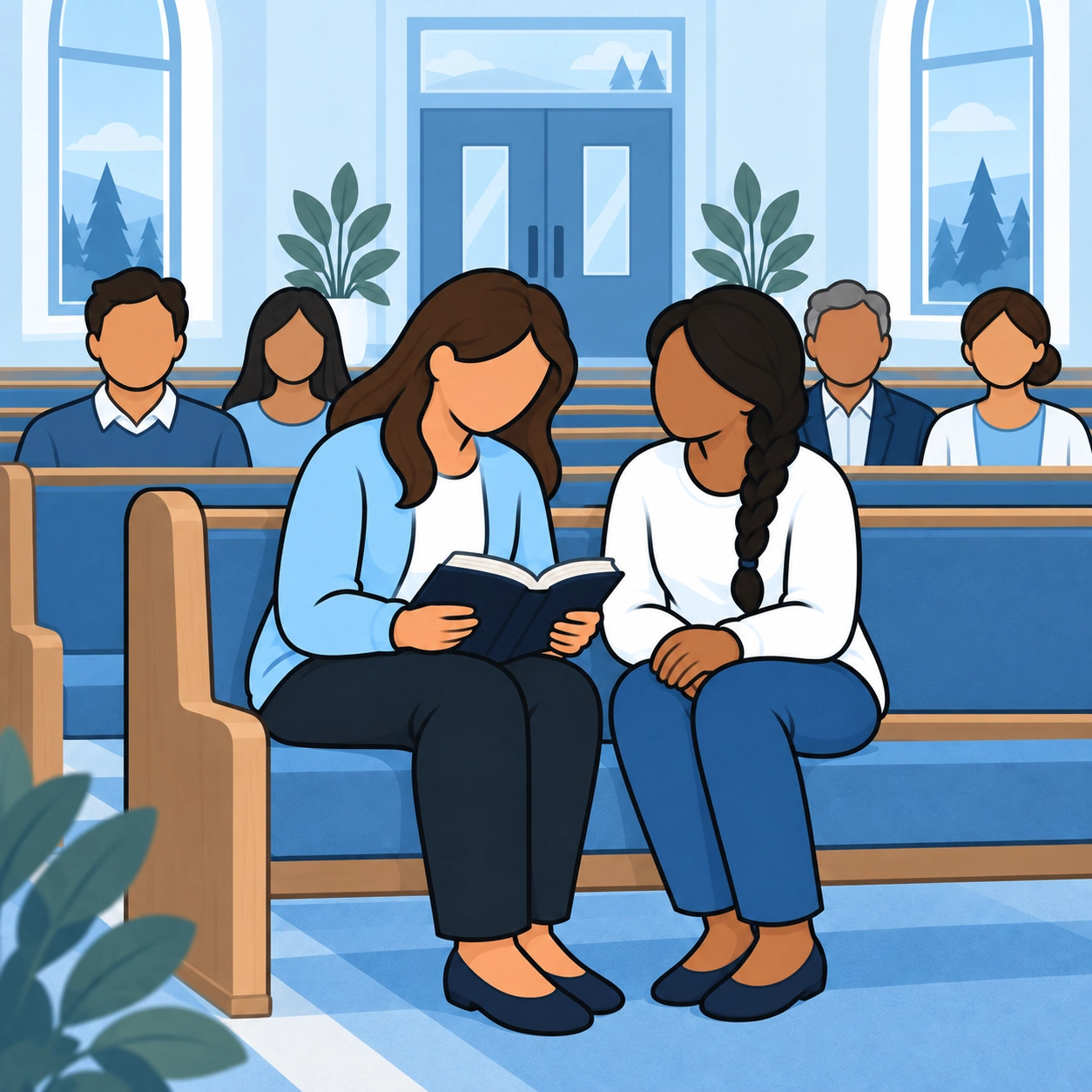
A trusted companion can help you try a visit without requiring a return to an unsafe place.
A long absence can gather many meanings. Life became crowded, faith became uncertain, a relationship changed, or something painful happened in the place that once felt familiar.
Returning does not require a polished explanation that makes every part of your story easy for others to hear. It can begin with a desire to explore worship and community again while still carrying questions.
Bring your real reasons into the plan.
Ask what you hope to find now: shared worship, teaching, friendship, space to explore faith, or support in a difficult season. Then name what you fear. These are different questions, and answering both can help you choose a setting and pace that fit your actual needs.
If someone trustworthy understands your history, invite them to help with the first step. They might answer practical questions, meet you outside, or sit beside you. You can decide in advance how much of your absence you want to discuss and with whom.
Let belonging develop without rushing trust.
An emotional first visit does not have to be interpreted immediately. Relief, sadness, familiarity, and discomfort can arrive together. Give yourself time afterward to notice what happened, rather than treating one strong feeling as a command to stay forever or never return.
If church was a place of abuse, intimidation, or manipulation, seek independent support and consider a different community. Forgiveness does not require unsafe access. Healthy leaders can hear concerns, respect boundaries, and allow trust to grow through their conduct rather than demanding it through their position.
Scripture in context
Open a passage to read the Bible text and its surrounding chapter here on AskJesus. The notes below explain how it connects with this question; they are reflections, not Bible quotations.
Hebrews 10:24-25
The passage encourages gathering for mutual love and encouragement. It should not be used to pressure someone into an unsafe community.
Romans 15:7
Christian welcome is modeled on Christ's welcome, not on a visitor producing an acceptable account of their absence.
Psalm 62:8
The psalm invites people to pour out their hearts before God. Complicated feelings can be brought honestly into prayer.
What to do with this today
You do not have to feel instantly settled or certain about every next decision.
Name your hope and your hesitation.
Write one thing you are seeking and one concern that needs attention before or during a visit.
Choose a trustworthy point of contact.
Ask someone who respects your boundaries for practical information or company.
Keep the first commitment small.
Attend one gathering without deciding about membership, volunteering, or every future Sunday.
Make room to reflect afterward.
Notice what felt supportive, what raised questions, and what you would need before another step.
Pause & pray
A prayer for this moment
Father, you know the whole story behind my absence and my desire to return. Help me bring both hope and hesitation into your presence. Lead me toward a community where truth, care, and accountability are practiced, and give me patience as trust develops. In Jesus’ name we pray, Amen.
A question to sit with
What would a supported, unhurried first step back into community look like for you?
Common questions
Do I owe everyone an explanation for being away?
No. You can share a brief answer or say that you are not ready to discuss it. More personal details belong with people who have earned your trust.
Does returning mean going back to my former church?
Not necessarily. You can explore another Christian community, especially if your former setting was harmful or cannot meet important needs.

Notice what felt healthy, what was difficult, and what you want to ask before returning.